Pages

Showing posts with label modular. Show all posts

11/10/14

10 Tips for Trade Show Success

For any company, participate in a trade fair is very expensive and we want obtain the maximum results with direct customers in the event and potential customers in the future. Here is an excellent article that explains that you must consider to be successful at your show.

1. Know why you exhibit before you do anything else
Just as intent is an important factor in the law, it’s essential in exhibiting. Too often exhibitors reserve a booth at a show without knowing why they are going in the first place. Without the guiding light of an overriding goal, they can’t shape their exhibit to match their needs, train their staff to aim at a common goal, or even know if they succeeded.


2. Exhibiting well requires both logistics AND marketing
You may say, “I object, your honor. I only have time to manage the logistics for our trade show.” That’s not going to get you off the hook. To succeed, you must also perform well the marketing tasks that too often get pushed aside in favor of details like shipping, ordering show services, and travel arrangements.

3. Exhibit at shows where your buyers are
Just as what is legal based on jurisdiction, so changes your fortunes as you exhibit at one of the over 10,000 shows you can choose from (in North America alone). You have to do the homework to determine what your best customers look like, and then find the trade shows where they freely roam.

4. Design your exhibit for your buyers, not you
What if your lawyer talked a lot just because he likes to hear the sound of his voice, rather than to convince the jury? Similarly, some companies design their exhibit to show themselves off the way they want to be seen – rather than focusing their message to best appeal to their clients and prospects.

5. Bring only willing booth staffers
Do the people you ask to staff your booth react as if being summoned for jury duty? Those people will take that negative attitude with them when they meet your booth visitors. Don’t ever break this law if you want to succeed at shows – just bring willing booth staffers, even if they cost more to get there.

6. Always train your booth staffers
Legal proceedings follow almost ritualistic protocol. You will please the judge if you follow similarly repetitive steps and train your staff for every show. Top sales people still need to know how to adapt to trade show booth staffing. And veteran staffers don’t know your new objectives, new products, latest pre-show and at-show promotions, and how to use the new technology you added to your booth.

7. Qualify your leads to boost follow up
Just as not everyone is guilty, not every lead is qualified. Your booth staffers must interrogate attendees to determine their value, and then rank the leads (A – Immediate, B – Intermediate, C – Future). Your reps will be more likely to follow up on the A & B leads, knowing you have already sent the C leads (that you still continue to market to) to the holding cell.

8. Promote your presence before and during the show
A good trial lawyer is a little bit the showman in order to sway the jury. You should have no objection to taking a page out of his book and promoting your presence before and during the show. Let attendees know all the reasons they should visit your booth, so you get their attention, rather than your competitor.Here’s a free book to help.

9. Plan for lead follow-up before the show
Have your closing arguments prepared before the trial ends – by preparing your lead follow up system before you go to the show. Assign a person to enter the leads, have fulfillment packets prepared, and have a smooth process for getting leads quickly to the right sales people.

10. Measure and report your results to keep exhibiting
After the show ends, the jury is still out whether it was a successful show or not. But if you track your leads to sales, compare your costs to your sales, and then report your satisfactory return on investment, you’ll be much more likely to be judged successful. 

If you’ve just realized you have been breaking these laws all along, consider yourself on parole. You’ve got some time to reform your ways, become a trade show law-abiding citizen, and generate trade show success.


About Autor: Mike Thimmesch 
Mike is director of industry relations for Skyline Exhibits, designer and builder of custom modular exhibits and portable displays.


4/8/14

11 Tips for International Exhibiting

Performing a show in another country on a project of great complexity, but that market is where are the best oportunities to grow your business.

So here are 11 tips, provided by Senior Account Executive Leslie Hopkins and Project Manager Julie Comfort of Skyline Houston, and Director of Development Philip Foust of Skyline Exhibits and Events, who have traveled around the world with their clients:

1.    When exhibiting abroad, you need more of everything: more time, more money, and more planning.
2.    It may sound obvious, but take the time to research before you go – about the country, the city, the people, and the show regulations.
3.    Learn about cultural differences, which transfer to how local attendees do trade shows differently.  What is considered polite and “politically correct” changes from country to country.
4.    Different cultures need different common phrases, even when you are communicating in English.  When emailing outside of the United States, it’s better to write “can you please?” instead of “will you please …”


5.    You have to remain flexible, even more so than domestically.
6.    Have cash in pocket!!  You find out that in some places you can’t use credit cards, but have to pay in cash, such as in Rome, where you pay cash to get electric.  Have cash for emergencies.
7.    You must let go of your usual expectations.  For example, there are no plug-in extension cords in Brazil– instead they wrap raw wire with tape!
8.    The exhibition venues can be so different – such as halls in the Middle East not having enough air conditioning.
9.    Getting a trade show exhibit through customs can be daunting.  Better to rent locally if you have a trusted source in country.
10.    Contact your cell phone carrier in advance and ask if you can use your phone overseas, and ask for one month international services.  But ask how much the calls, data, and texts will cost so there are no surprises.
11.    If your products or equipment are heavy and you need to ship them to the show, plan far ahead so you can ship earlier and cheaper by boat.  And yes, international shipping is harder.

The world is very large and there are many opportunities on the planet, so do not hesitate, take the risk there are big markets waiting for you.

10/23/13

Light installation by (fos)


(fos) is a multidisciplinary team based in Madrid and Barcelona. They are working as independent architects, interior designers, art directors and graphic designers, decided to join as a multidisciplinary team to create design experiences ‘and, above all, have fun’. (fos) is also the name of the first ephemeral installation by the team. It means light in Greek and melted in Catalan.
In the project this has been represented by a skin that covers both vertical and horizontal surfaces. The protected facade of the vegan restaurant Rayen at Lope de Vega street in Madrid has been illuminated for 4 days and nights by more than 250ml of yellow tape, painted décor items, pineapples and… a lamp. A visual game between perspective and colored volumes that gained the looks.

10/21/13

Infographic - Bale Out: For £85 Million You Could Have Bought…


Infographic - Bale Out: For £85 Million You Could Have Bought…

In the madness of the football transfer window big money is paid for big talent. Here Trophy Store looks at some of the alternatives for the £85 million real madrid has splashed out on gareth bale and what you could buy with as similar outlay.  www.trophystore.co.uk

9/18/13

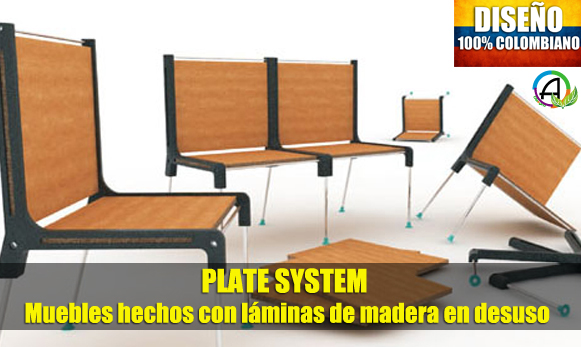
Plate System - Diseño Industrial Ecologico

El diseñador industrial colombiano Santiago Galeano Alarca diseño este sistema de mobiliario que consta de piezas de ensamblaje para armar sillas y mesas de distintos tamaños, modulaciones y formas, aprovechando trozos de madera en desuso. 100% Diseño Colombiano.

6/5/13

Tipos de Stands


TIPOS DE STANDS

Dentro del mundo de los stands existen diferentes tipologías, definidas por características tales como el presupuesto del cliente, el tipo de producción que tiene, el modo de instalación, la feria y el público al cual va estar dirigido, entre muchos otros, cada uno tiene sus ventajas y desventajas, pero todos tienen el mismo objetivo: comunicar un mensaje contundente a los clientes potenciales de la compañía. Acá enumero los 3 tipos de stands principales que se manejan en las principales ferias a nivel mundial:

Stand libre, con diseño especial para el cliente
1. STAND DE DISEÑO LIBRE

Este se  toma como un proyecto global en el que no hay limitaciones a la creatividad, pero, como siempre el pero, existe limitaciones de tipo económico (presupuesto del cliente), de tipo espacial (los espacios feriales no son todos iguales) o de producción (no siempre se tiene la tecnología que se desea para producir diferentes elementos diferenciadores dentro de un stand). Este tipo de stand logra captar la atención del cliente y distinguirse de los competidores por poseer un diseño exclusivo pero asi mismo son obras de mayor envergadura no solo en diseño sino también en producción, montaje y desmontaje lo que se convierte en un proyecto de costos importantes para el cliente.
Los stands de diseño cuestan como mínimo el doble que los modulares (y habitualmente mucho más). Lo bueno que tienen es que nos permiten “comprar” segundos de atención: en lugar de 2 ó 3 quizá podamos tener hasta 10 segundos de evaluación por parte del tráfico de personas en la feria. Sin embargo, es muy importante tener en cuenta el aspecto formal y de comunicación de nuestro stand, debido a que puedes tener un excelente diseño exterior pero su no logras transmitir el mensaje de la compañía no estás haciendo nada y tu stand simplemente pasará a ser uno más dentro de cientos en la feria.

2.     STAND MODULAR

Stand modular, ajustado a las necesidades del cliente
Estos stands son básicamente estructuras de aluminio con paneles plastificados. Simple. Se instalan normalmente en recintos feriales y son proporcionados en la mayoría de las veces por el organizador del evento, son estructuras básicas, en donde el mayor impacto se debe lograr por medio de un buen arte impreso o algún accesorio multimedia que podamos incorporar. Este tipo de stand aporta un coste bajo en producción, renta o compra, montaje y además una versatilidad de implantación óptima. Tiene su desventaja y es que limitan enormemente la capacidad de comunicación, es en esta tipología donde el servicio al cliente entra a jugar un factor muy importante en tránsito de un cliente de simple espectador a consumidor del producto o servicio.
Los stands modulares son mucho más baratos que los de diseño pero reciben mucha menos atención es claro y debemos estar preparados para enfrentarnos a muchos competidores con un diseño igual al nuestro en la feria y deberemos recurrir a otros elementos para explicar cual es el valor diferencial de la empresa  utilizando herramientas como: carteles, displays, nuestras máquinas en la zona más exterior (si es que son reconocibles), proyecciones, etc.

3.     STAND PORTÁTIL
Stand portatil, generico dentro del mercado

Este es el ultimo tipo de stand, es el más básico de todos y se utiliza con mucha frecuencia en eventos pequeños, básicamente se trata de un soporte gráfico fácilmente transportable, de muy fácil instalación, en la mayoría de los casos lo puede instalar una sola persona en periodos de tiempo muy cortos, se presentan como una opción muy económica pero así mismo muy pobre en relación con la calidad de mensaje que podemos transmitir a nuestros cliente potenciales, son buenas opciones para empresas PYMES o organizaciones que no tienen mucho presupuesto pero que de igual forma desean tener una imagen dentro de un evento, como diseñadores nuestro papel se enfoca en el desarrollo del arte impreso y de la selección de stand adecuado dependiendo de los requerimientos y presupuesto del cliente. No es una opción mala solo es una opción muy económica.