Pages

Showing posts with label Design. Show all posts

11/17/17

Why Didn’t That Attendee Stop 
In My Trade Show Booth?


1.Your booth looked too boring

trade show displays anvidisegno new york attendee problems


2. Your benefit was not clear

trade show displays anvidisegno new york attendee problems


3. He doesn’t know you can solve his problems.

trade show displays anvidisegno new york attendee problems


4. Your booth staffers didn’t appeal to him

trade show displays anvidisegno new york attendee problems


5. Your booth staff didn’t attempt to engage him.

trade show displays anvidisegno new york attendee problems


6. Your booth space lacks activity.

trade show displays anvidisegno new york attendee problems


7. He wasn’t invited

trade show displays anvidisegno new york attendee problems


8. He already has an appointment.

trade show displays anvidisegno new york attendee problems

You’ve got a tremendous investment, not only in money, but also time and hopefully training in marketing your business at trade shows. Don’t get in the way of your own success!

--------------------------------------------------------------------------------------------------------

Let us create your next custom trade show exhibit with the message that will integrate your purpose and goals to achieve results for the next season in your marketing program.


Get a quote for your project


11/15/17


1. Underselling your company with bad graphics

2017_1_tradeshowdisplays_anvidisegno_newyork_badgraphics

2. Putting way too much text on your display

2017_1_tradeshowdisplays_anvidisegno_newyork_lot text

3. Not promoting your presence at trade shows

2017_1_tradeshowdisplays_anvidisegno_newyork_not traffic

4. Not training your booth staff and discussing proper expectations

2017_1_tradeshowdisplays_anvidisegno_newyork_salesteam

5. Not listening to your prospects needs

2017_1_tradeshowdisplays_anvidisegno_newyork_leasiningcustomers

6. Depending on a fishbowl to bring in qualified leads

2017_1_tradeshowdisplays_anvidisegno_newyork_qualifield leads


7. Hauling too much literature to your booth

2017_1_tradeshowdisplays_anvidisegno_newyork_publicity

8. Not planning for trade show success

2017_1_tradeshowdisplays_anvidisegno_newyork_planning

9. Not informing your exhibit service partner

2017_1_tradeshowdisplays_anvidisegno_newyork_partner

 10. Not following up on leads

2017_1_tradeshowdisplays_anvidisegno_newyork_follow up

You’ve got a tremendous investment, not only in money, but also time and hopefully training in marketing your business at trade shows. Don’t get in the way of your own success!

--------------------------------------------------------------------------------------------------------

Let us create your next custom trade show exhibit with the message that will integrate your purpose and goals to achieve results for the next season in your marketing program.


Get a quote for your project


Trade show exhibits displays new york chicago boston orlando

10/29/14

10 Ways to Impress the Press at Your Next Trade Show

In the following article you will find different ways to capture the attention of the press in your event and increase the chances of generating traffic to your booth and grow business opportunities with your potential customers. Excellent article.


1. Find your angle. 
As you start to develop your press strategy, your first task is to come up with a spin that will get editors - and their readers - interested in your company. What products or services will you display that are new and innovative since the last time you attended this show? Do you have a story with a human-interest twist? What about your product will save the publication's readers time, money, or hassles? Skip the boring history of your company and bios of company officers. For the most part, editors couldn't care less, and neither could their readers. 

2. Work with show management. 
Start by finding out when show management will release the list of press reps covering the show. Then ask about on-site opportunities to meet with the press such as VIP press tours before show opening. Also ask if a press-briefing room will be available and, if so, how you can book it for the prime time slots early in the show.

3. Target the right press. 
There's no such thing as bad press, but write-ups in some publications are certainly better than others. Do a little research to find out which publications your clients and prospects are most likely to read. The most popular of those should become your "tier-one," or targeted publications. Defining this list of targeted media outlets will allow you to focus on creating relationships with writers and editors who have the power to put your messages directly in front of the end users you hope to reach. 

4. Start communicating early.
It's critical to get on editors' radar before they arrive at the trade show, or you risk not making their must-see list of exhibitors. If you're unsure about when you should start contacting editors, simply ask a few of your targeted journalists for the optimum time to submit an initial press release. Depending on their schedules, this could be months before a show, so they can meet editorial deadlines for pre-show issues. Others may simply prefer that you distribute your release as part of your press kit in the official press room. 

5. Create an interesting press kit. 
Unless you've spoken with members of the media before the show opens, your press kit may be your first - and only - contact with reporters. The way you present your information, the medium you use, and the content itself all have an impact on whether your message will reach your targeted editors or end up in the trash. 

6. Write an engaging press release. 
Once you've attracted editors' attention enough for them to pick up your press kit, it needs to deliver the kind of information they're looking for. Your press release should include the following: company name and contact information (including booth number); a short, informative headline with a secondary description as a subhead; the body of the press release; and finally, a brief boilerplate description of your company and why it's an authority in your industry.

7. Provide publication-quality visuals. 
If you have interesting photos to support your press release, include them in the press kit. For example, if your release is all about a new product you're launching at the show, provide high-quality images of that product. Oftentimes publications rely on provided product shots, meaning that if you don't have usable, high-quality images, your new gadget may have zero chance of getting reviewed. 

8. Develop an at-show press plan. 
Press kits and press releases can be great for getting the word out about your company and its products, but if you're really serious about attracting the press, consider adding at-show elements to your press plan. For example, you could host a formal press briefing in the show-provided press room, plan a before- or after-hours press event in your exhibit with hands-on demonstrations, or hold an after-hours wine-'em-and-dine-'em reception. Depending on your budget and press objectives, you may want to choose several different methods.

9. Offer one-on-one interviews. 
Depending on the news being announced, press members I've spoken with consider group press conferences less effective than one-on-one press interviews in terms of depth of information and relationship building. They'd rather spend their time speaking with a company executive and getting the specific information that would be of value to their readers than getting the generic information often presented in a group press briefing. 

10. Don't forget the follow-up.
Just because the show's over doesn't mean your press duties are done, too. Drop a quick e-mail to the editors you spoke with, thanking them for their time, providing any information promised, and asking if they need any further information. 

See full article: 

About Autor:
Candy Adams, CTSM, CME,CEM, CMP, CMM,"The Booth Mom,"is an independent exhibit-management consultant, trainer, speaker, writer, and an Exhibitor conference faculty member. CandyAdams

10/23/13

Light installation by (fos)


(fos) is a multidisciplinary team based in Madrid and Barcelona. They are working as independent architects, interior designers, art directors and graphic designers, decided to join as a multidisciplinary team to create design experiences ‘and, above all, have fun’. (fos) is also the name of the first ephemeral installation by the team. It means light in Greek and melted in Catalan.
In the project this has been represented by a skin that covers both vertical and horizontal surfaces. The protected facade of the vegan restaurant Rayen at Lope de Vega street in Madrid has been illuminated for 4 days and nights by more than 250ml of yellow tape, painted décor items, pineapples and… a lamp. A visual game between perspective and colored volumes that gained the looks.

10/21/13

Infographic - Bale Out: For £85 Million You Could Have Bought…


Infographic - Bale Out: For £85 Million You Could Have Bought…

In the madness of the football transfer window big money is paid for big talent. Here Trophy Store looks at some of the alternatives for the £85 million real madrid has splashed out on gareth bale and what you could buy with as similar outlay.  www.trophystore.co.uk

9/18/13

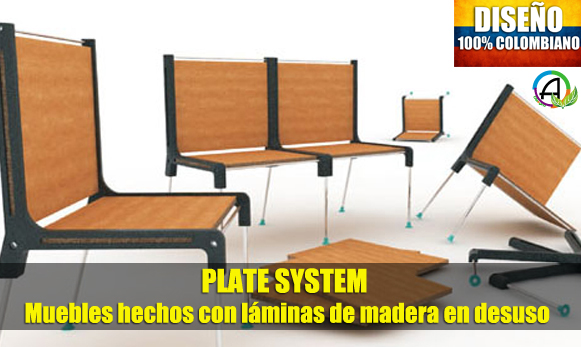
Plate System - Diseño Industrial Ecologico

El diseñador industrial colombiano Santiago Galeano Alarca diseño este sistema de mobiliario que consta de piezas de ensamblaje para armar sillas y mesas de distintos tamaños, modulaciones y formas, aprovechando trozos de madera en desuso. 100% Diseño Colombiano.

6/5/13

Tipos de Stands


TIPOS DE STANDS

Dentro del mundo de los stands existen diferentes tipologías, definidas por características tales como el presupuesto del cliente, el tipo de producción que tiene, el modo de instalación, la feria y el público al cual va estar dirigido, entre muchos otros, cada uno tiene sus ventajas y desventajas, pero todos tienen el mismo objetivo: comunicar un mensaje contundente a los clientes potenciales de la compañía. Acá enumero los 3 tipos de stands principales que se manejan en las principales ferias a nivel mundial:

Stand libre, con diseño especial para el cliente
1. STAND DE DISEÑO LIBRE

Este se  toma como un proyecto global en el que no hay limitaciones a la creatividad, pero, como siempre el pero, existe limitaciones de tipo económico (presupuesto del cliente), de tipo espacial (los espacios feriales no son todos iguales) o de producción (no siempre se tiene la tecnología que se desea para producir diferentes elementos diferenciadores dentro de un stand). Este tipo de stand logra captar la atención del cliente y distinguirse de los competidores por poseer un diseño exclusivo pero asi mismo son obras de mayor envergadura no solo en diseño sino también en producción, montaje y desmontaje lo que se convierte en un proyecto de costos importantes para el cliente.
Los stands de diseño cuestan como mínimo el doble que los modulares (y habitualmente mucho más). Lo bueno que tienen es que nos permiten “comprar” segundos de atención: en lugar de 2 ó 3 quizá podamos tener hasta 10 segundos de evaluación por parte del tráfico de personas en la feria. Sin embargo, es muy importante tener en cuenta el aspecto formal y de comunicación de nuestro stand, debido a que puedes tener un excelente diseño exterior pero su no logras transmitir el mensaje de la compañía no estás haciendo nada y tu stand simplemente pasará a ser uno más dentro de cientos en la feria.

2.     STAND MODULAR

Stand modular, ajustado a las necesidades del cliente
Estos stands son básicamente estructuras de aluminio con paneles plastificados. Simple. Se instalan normalmente en recintos feriales y son proporcionados en la mayoría de las veces por el organizador del evento, son estructuras básicas, en donde el mayor impacto se debe lograr por medio de un buen arte impreso o algún accesorio multimedia que podamos incorporar. Este tipo de stand aporta un coste bajo en producción, renta o compra, montaje y además una versatilidad de implantación óptima. Tiene su desventaja y es que limitan enormemente la capacidad de comunicación, es en esta tipología donde el servicio al cliente entra a jugar un factor muy importante en tránsito de un cliente de simple espectador a consumidor del producto o servicio.
Los stands modulares son mucho más baratos que los de diseño pero reciben mucha menos atención es claro y debemos estar preparados para enfrentarnos a muchos competidores con un diseño igual al nuestro en la feria y deberemos recurrir a otros elementos para explicar cual es el valor diferencial de la empresa  utilizando herramientas como: carteles, displays, nuestras máquinas en la zona más exterior (si es que son reconocibles), proyecciones, etc.

3.     STAND PORTÁTIL
Stand portatil, generico dentro del mercado

Este es el ultimo tipo de stand, es el más básico de todos y se utiliza con mucha frecuencia en eventos pequeños, básicamente se trata de un soporte gráfico fácilmente transportable, de muy fácil instalación, en la mayoría de los casos lo puede instalar una sola persona en periodos de tiempo muy cortos, se presentan como una opción muy económica pero así mismo muy pobre en relación con la calidad de mensaje que podemos transmitir a nuestros cliente potenciales, son buenas opciones para empresas PYMES o organizaciones que no tienen mucho presupuesto pero que de igual forma desean tener una imagen dentro de un evento, como diseñadores nuestro papel se enfoca en el desarrollo del arte impreso y de la selección de stand adecuado dependiendo de los requerimientos y presupuesto del cliente. No es una opción mala solo es una opción muy económica.